Bring Cloth Diapers Back
· 11 min read · Mama Fern Team
· 11 min read · Mama Fern Team
You already care about what touches your baby’s skin. You read labels, you hunt down organic cotton onesies, and you’ve probably swapped out a few household products for low-tox alternatives. But every time you think about cloth diapers, your brain says: “Yes, but…”
Yes, cloth sounds better, but there are so many styles.
Yes, the chemicals in disposables worry you, but the laundry feels impossible.
Yes, you want to do the “greener” thing, but you’re already exhausted.
This post is for you: the already-on-board, low-tox, organic-loving mom who just feels overwhelmed by cloth diapering. Instead of a technical manual, think of this as a mindset reset and a gentle case for cloth that fits a real, busy life.
If you’re a low-tox, organic cotton person, it’s probably not news that conventional disposable diapers can contain things you’d never willingly rub on your body, let alone your innocent baby’s body.
Most mainstream disposables are made with:
Even brands that market themselves as “clean” or “natural” can still include a cocktail of processing chemicals, optical brighteners, odor-masking ingredients, and undisclosed components hidden behind words like “fragrance” or “absorbent core.” And unlike your organic cotton sleepers, diapers sit directly against your baby’s skin, 24 hours a day, in one of the most sensitive areas of the body.
Most babies will use thousands of diapers before they are potty trained. Even if each diaper only contains a small amount of something you wouldn’t choose, that exposure is repetitive and constant. For a mom who already buys organic produce when she can and avoids heavily scented detergents, that reality feels… off.
Cloth diapers aren’t magically perfect, but they do let you choose exactly which materials touch your baby. That alone can be a huge relief.
You’ve already made thoughtful decisions about clothing: organic cotton bodysuits, GOTS-certified pajamas, breathable natural fibers. Cloth diapers are simply the underwear layer that matches the standards you’ve set everywhere else.
With cloth, your baby’s diaper can be:
Think of it this way: if you wouldn’t put a synthetic, fragranced polyester bodysuit on your baby all day and night, why let a synthetic, fragranced, gel-filled diaper be the one garment that never comes off?
You don’t have to be “perfect” or go 100% cloth to benefit from this. Even using cloth at home during the day and disposables overnight or on trips dramatically reduces the time your baby spends in a diaper made from materials you’re not comfortable with. This is about alignment, not all-or-nothing purity.
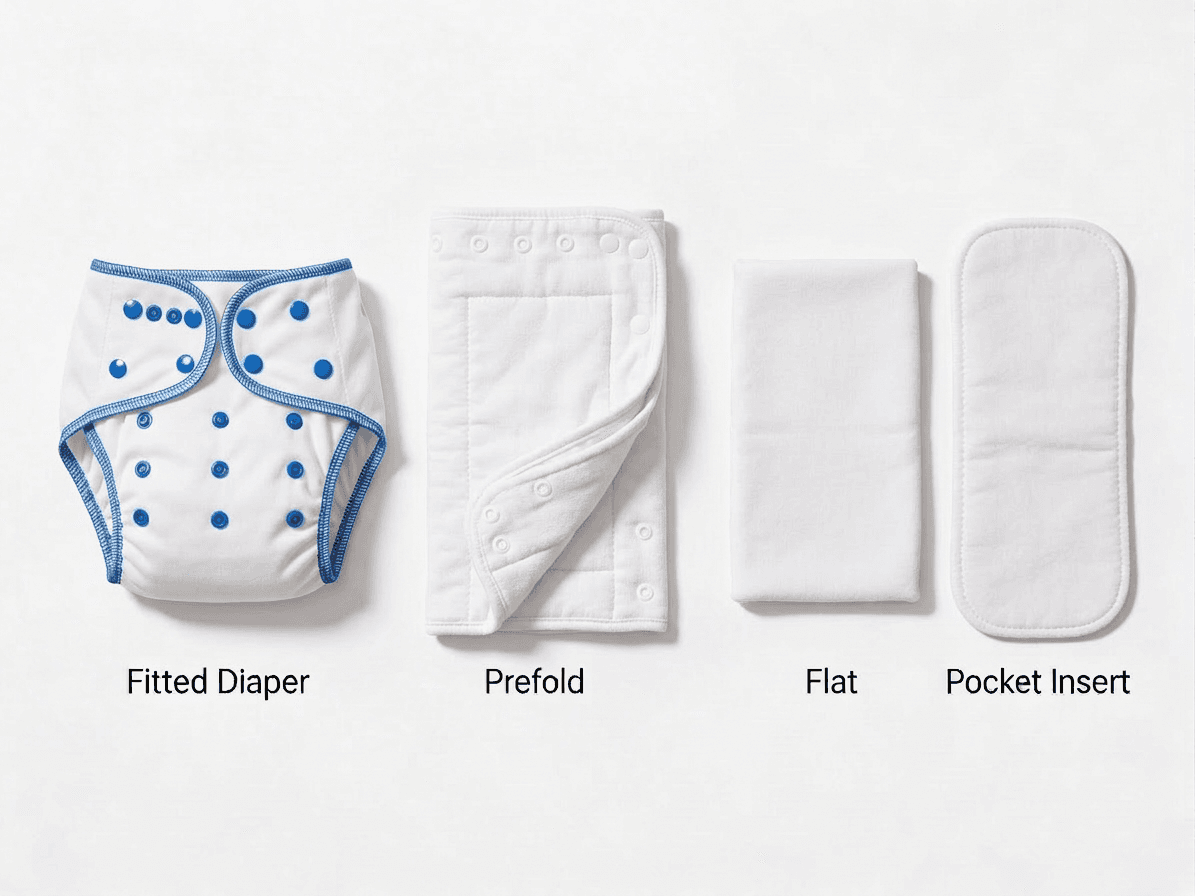
If you’ve ever tried to Google cloth diapering, you’ve probably been hit with an avalanche of jargon: AIOs, pockets, flats, hybrids, prefolds, boosters, inserts, liners. Suddenly there are dozens of decisions to make, and you find yourself staring at 17 tabs open on your phone at 2 a.m.
Here’s the truth: the basics are very simple.
Every diaper, disposable or cloth, is just:
That’s it. All the fancy terms are just different ways of arranging those two things.
The overwhelm usually comes from:
But you don’t have to become a cloth diaper expert to start. You don’t have to know every acronym. You don’t owe the internet a dissertation on inserts. You’re allowed to learn with your baby, in real time, in a way that fits your life. Above all, no matter what modern culture advertises, you can completely change your mind whenever you discover better ways to serve your family!
It sounds backwards, but once you’re set up, cloth can actually simplify your life instead of adding one more thing. This is one of the first things I always tell prospective cloth diapering mamas!
How many times have you realized at 9 p.m. that you’re down to three disposables and someone has to sprint to the store or overnight ship the luxury brand? Disposables tie you to a constant cycle of buying, stocking, and hoping you guessed the right size and quantity in the right brands.
Cloth diapers live in your house. Once you have a basic stash, you just wash and reuse. The mental load shifts from “Did I remember to buy diapers?” to “I’ll toss a load in after bedtime.” It becomes a part of your household rhythm, not another line item to manage every week.
You’re already doing laundry. Adding diaper laundry for a newborn looks like:
There’s no decision fatigue every time you change a diaper. There’s no price comparison every month. It’s just: use, wash, repeat.
Many parents who switch to cloth notice fewer mystery rashes, especially if they pair it with a gentle, fragrance-free detergent. When the material against your baby’s skin is something you’d happily wear yourself, like a soft organic cotton, your peace of mind improves.
And if a rash does show up, you have fewer variables to consider. You’re not wondering which added lotion, fragrance, or “moisture-indicator” strip might be the culprit. You already know what’s in the diaper.
You already know organic products cost more. Organic cotton clothing, low-tox cleaners, high-quality food. They all add up. Cloth diapering can feel like yet another expensive switch.
The difference is that cloth is a front-loaded investment that pays you back.
If you are already putting your budget toward low-tox living, cloth diapers are one of the few places where spending once can actually reduce your long-term costs, without asking you to compromise your standards.
And you absolutely don’t need a huge, Pinterest-ready stash of 40 matching diapers. You can start with just enough for part-time use, see what you like, and build slowly. Think of it like building a capsule wardrobe rather than buying an entire closet in one day.
Let’s be honest: laundry is the part that makes you want to slam your laptop closed.
But picture this: you already wash kitchen towels, baby clothes, cloth napkins maybe. You wash clothes after spit-ups, blowouts, grass stains. Diapers are just one more category of dirty textiles your machine handles.
What the laundry is not:
A realistic routine often looks like:
Most parents find that once they’ve run this cycle a few times, it becomes muscle memory. If your brain can hold “Wednesday is trash day,” it can also hold “Every other evening is diaper wash night.”
If the idea of finding the “perfect” wash routine makes you spiral, here’s your permission slip: start with the simplest version recommended by a cloth diaper brand or a trusted guide and tweak only if you see a problem (like lingering stink or poor cleaning). You don’t need a custom spreadsheet. You just need “good enough.” I'll happily post our current setup if there's interest!
There’s a quiet perfectionism that sneaks into low-tox communities: if you can’t do it perfectly, why do it at all? Cloth diapering gets caught in that trap a lot.
But you are allowed to:
Your baby’s body doesn’t know whether the diaper is part-time or full-time. Every disposable you replace with cloth is:
Think of cloth like cooking from scratch. Sometimes you make a homemade meal; sometimes you order takeout. The homemade meal still matters, even if you don’t do it for every single dinner.
If you’re feeling that mix of “Yes, I want this” and “No, I cannot handle one more decision,” here’s a simple way to ease in.
Choose a straightforward, modern style, usually a pocket diaper or a fitted. Look for:
Don’t worry about perfect absorbency combinations or advanced folding yet. Start with the cloth diaper equivalent of a basic organic onesie.
Instead of a full stash, start with:
This is enough to try cloth for a day at home and then wash. If you love it, you’ll know what to buy more of. If something isn’t working, you’ll know what to tweak, without being stuck with a mountain of diapers you don’t like. You can resell things or use them in new ways. Inserts can be boosters for other styles, pockets can be shells (unstuffed), flats can be kitchen towels!
Pick a time that’s easy:
Change your mindset from “I’m switching to cloth” to “I’m trying cloth during two or three changes today.” One change at a time.
Your first few changes might be awkward. You may mis-snap. You might get a leak. That doesn’t mean cloth is too complicated; it means you did something new.
You’ve already learned how to:
Those all took a few tries, too. Diapers are no different. Persevere, you got this mama! There's a whole community here who would love to help too!
You’re already the mom who checks fabric content tags. The mom who pays a little extra for organic cotton because it matters to you. The mom who buys unscented detergent and unscented baby wash and reads ingredient lists most people ignore.
Cloth diapering isn’t a brand-new identity; it’s an extension of who you already are.
It doesn’t have to be extreme. It doesn’t have to be zero-waste perfection or nothing. It doesn’t even have to look like the carefully staged photos you see online. It can look like a basket of clean diapers by your couch, an extra load of laundry every couple of days, and a baby wearing soft, breathable fabric where it matters most.
If you feel that little tug of “I want to do this, I just feel overwhelmed,” consider this your encouragement to try, not to transform your whole life overnight. Buy a few. Learn as you go. Keep what works. Let go of what doesn’t.
You don’t have to earn the right to call yourself a low-tox, organic, cloth-curious mom. You already are her. Cloth diapers are just another tool in her toolbox.
We launch March 16th! Get weekly blogs, family style tips, and be first to shop when we open.
Learn how to support your pelvic floor postpartum with babywearing and breastfeeding, including gentle tips for healing in a low-estrogen season.
Why organic cotton is a crunchy-mom staple: chemical-free clothes that breathe, last hundreds of washes, and come GOTS-certified from regenerative farms.
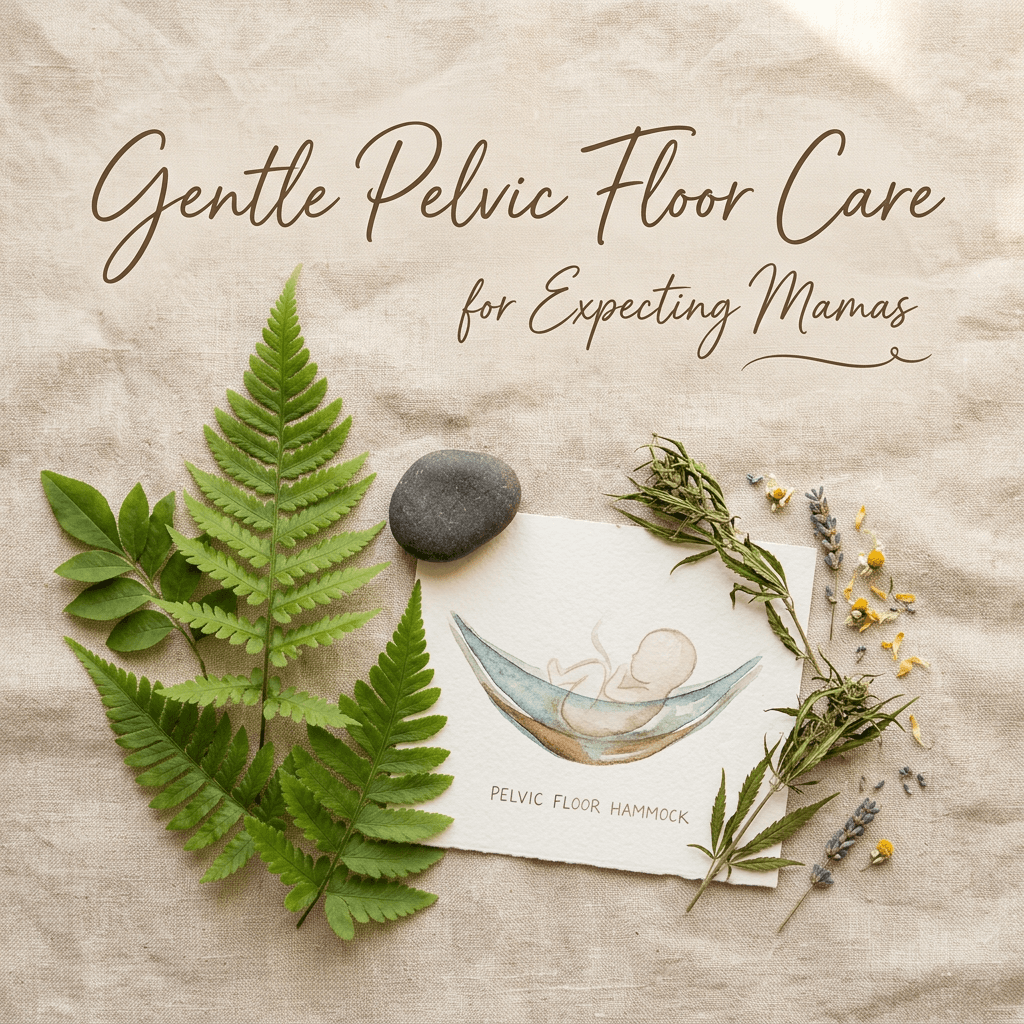
Here's why your pelvic floor matters in pregnancy, how it affects birth and postpartum, and simple, gentle ways to support it as an expecting mama.