
Postpartum Pelvic Floor Support & Babywearing
· 8 min read · Mama Fern Team
· 8 min read · Mama Fern Team
Your postpartum body is carrying so much more than the weight of your baby. It’s carrying new rhythms, new emotions, new responsibilities, and often a healing pelvic floor that is quietly doing a lot of work behind the scenes. In this tender season, especially if you’re babywearing and breastfeeding, your body deserves extra support instead of pressure to “bounce back.”
Pelvic floor health doesn’t end at birth. In many ways, it becomes even more important postpartum. Those muscles and ligaments at the base of your pelvis have been stretched, loaded, and asked to show up for pregnancy and birth, and now they are stabilizing you while you stand, feed, rock, and carry your little one. When we talk about postpartum pelvic floor support, we’re simply talking about caring for the core of your body as you care for your baby.
However your baby arrived, vaginal birth or cesarean, your pelvic floor has spent months under extra load. During pregnancy, those muscles supported your growing uterus and baby. During birth, they had to stretch and respond to intense pressure. Now, in postpartum, you’re moving through your day with a body that is still healing and a hormone profile that looks very different from your pre-baby self.
If you are breastfeeding, your estrogen levels are naturally lower. This is a normal, God-designed part of lactation, but it can affect how your pelvic floor and vaginal tissues feel. You might notice more dryness, sensitivity, or a “thin” feeling in those tissues. You might also find that sitting for long stretches to feed baby leaves your tailbone, hips, or low back feeling sore. None of this means something is wrong with you. It just means your body is in a different hormonal season and needs gentler, slower care.
Postpartum pelvic floor support is about more than preventing leaks or prolapse, though those matter. It’s also about comfort. It’s about feeling grounded in your body as you mother, and making everyday tasks like nursing, babywearing, and walking (or chasing, once that potato becomes mobile) feel more sustainable.
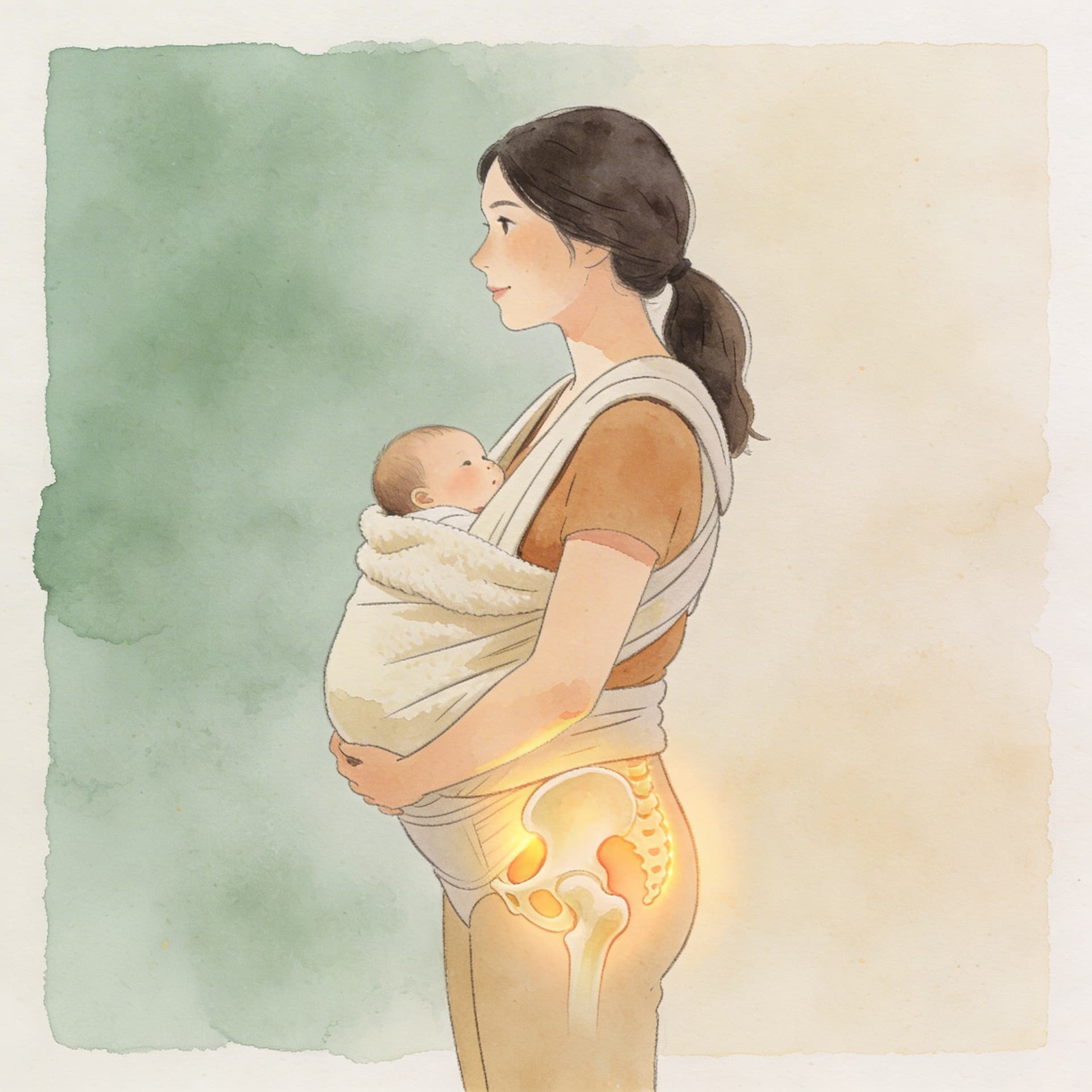
Babywearing can be such a gift in postpartum life. Your baby is close to your heart, you have hands free for older kids or housework, and you can move together through your day. But babywearing also adds load to a body that is healing, and your pelvic floor helps manage that extra weight.
When you strap on a carrier, your pelvic floor, hips, and core all work together to keep you upright and stable. In early postpartum, those systems are still recalibrating. Your abdominal wall is reconnecting, your joints and ligaments are still a little looser, and your pelvic floor may be recovering from stretching, bruising, or stitches. Adding the extra weight of your baby can sometimes tip things from “tolerable” to “too much right now.”
Common signs that babywearing might be stressing your pelvic floor include:
These aren’t failures. They’re simply messages from your body. You have permission to listen and respond.
The way you stand and walk with your baby in the carrier can either support or strain your pelvic floor. Many of us instinctively lean backward to counterbalance baby (mama stance), lock our knees, or thrust our hips forward (pelvic tuck). These patterns can push extra pressure down into the pelvis.
Instead, think of three simple cues:
You don’t need perfect posture. You just need enough awareness to avoid positions that consistently leave you feeling worse.
It can help to treat babywearing like progressive strength training for your postpartum body rather than something you should do for hours right away.
A supportive carrier also matters. Look for one that brings baby high and close (“kissable” height), spreads weight across both shoulders, and has a waistband that supports your midsection without digging into your healing abdomen or pelvic area. Comfort is a clue: if the carrier makes you hold your breath or shift constantly, it may be worth adjusting or trying another style.
Breastfeeding is beautiful and sacrificial. It also shapes your hormones in a unique way. Lower estrogen during this time can leave vaginal tissues feeling drier, more sensitive, or more fragile. For some women, this shows up as:
You might also fall into a “curling in” posture while breastfeeding: hunching your shoulders forward, tucking your pelvis under, and sitting on your tailbone. Over time, that can make your pelvic floor and back feel more strained.
Try these small shifts to make breastfeeding more pelvic-floor-friendly:
As you settle in to feed, take a slow breath in and feel your ribcage expand. On the exhale, invite your jaw, shoulders, and pelvic floor to soften. You are allowed to relax while you nourish your baby.
You don’t need a complicated rehab routine to support your pelvic floor while you’re babywearing and breastfeeding. Think “micro-moments” layered into your real life.
If you’re worried about symptoms or feel overwhelmed, it’s always okay to ask for help. A pelvic floor physical therapist can assess how your muscles are actually functioning, help you find more supportive babywearing and feeding positions, and create a plan that fits your life as a busy, tired, deeply loving mama.
Postpartum pelvic floor healing takes time. Your body has walked through pregnancy, birth, and now the constant giving of postpartum life. You are not behind if you still feel wobbly, leaky, or tender. You are healing.
As you buckle your baby into the carrier or settle in for another feeding, you might breathe a simple prayer: “Lord, thank You for this body that keeps showing up. Help me care for the muscles and bones that hold my baby close.” Your pelvic floor is part of that care. You’re allowed to honor it.
We launch March 16th! Get weekly blogs, family style tips, and be first to shop when we open.

Here's why your pelvic floor matters in pregnancy, how it affects birth and postpartum, and simple, gentle ways to support it as an expecting mama.
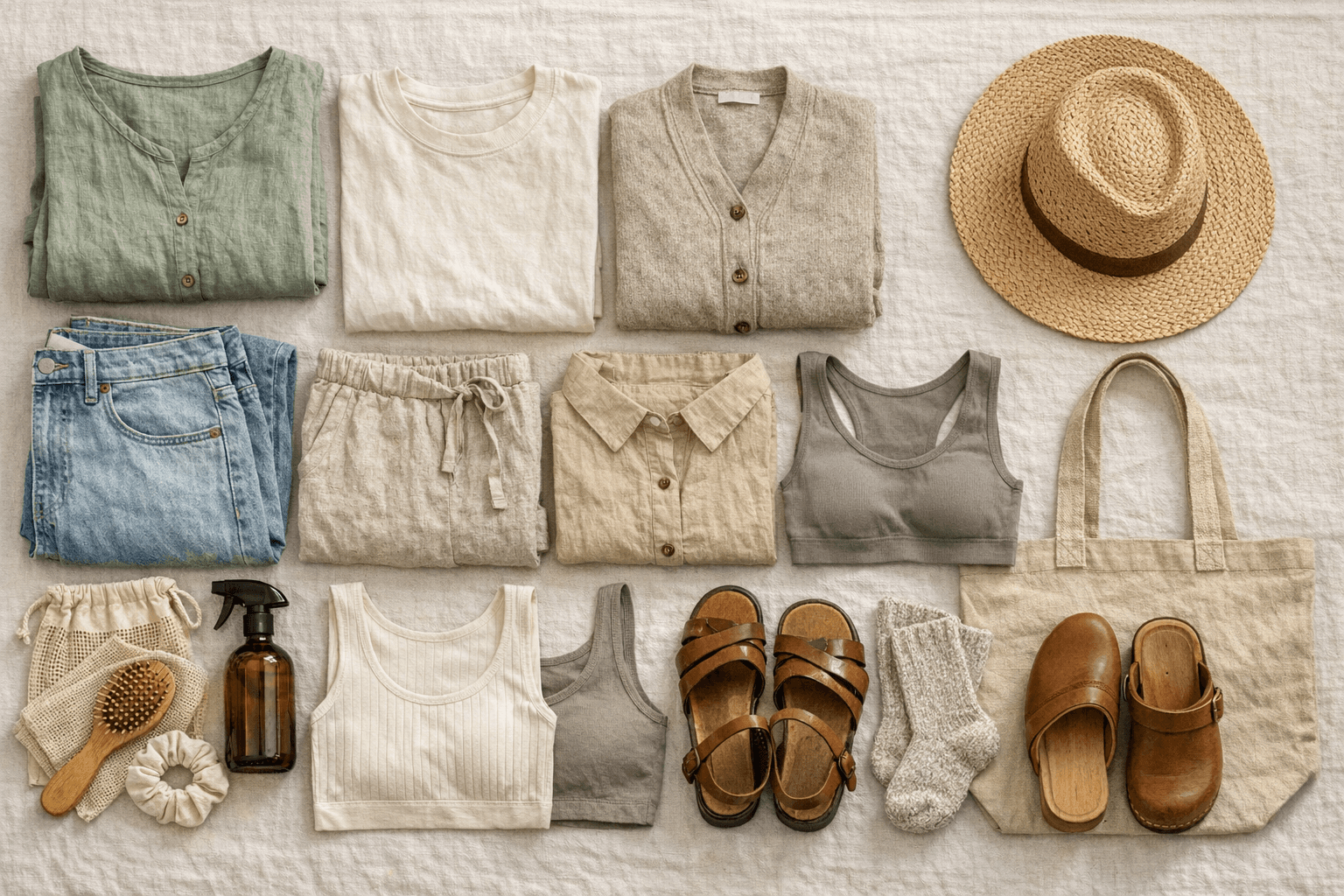
How to build a kids' capsule wardrobe for a homeschool family: how many pieces you need, what belongs in it, and why fewer organic basics make the day easier.
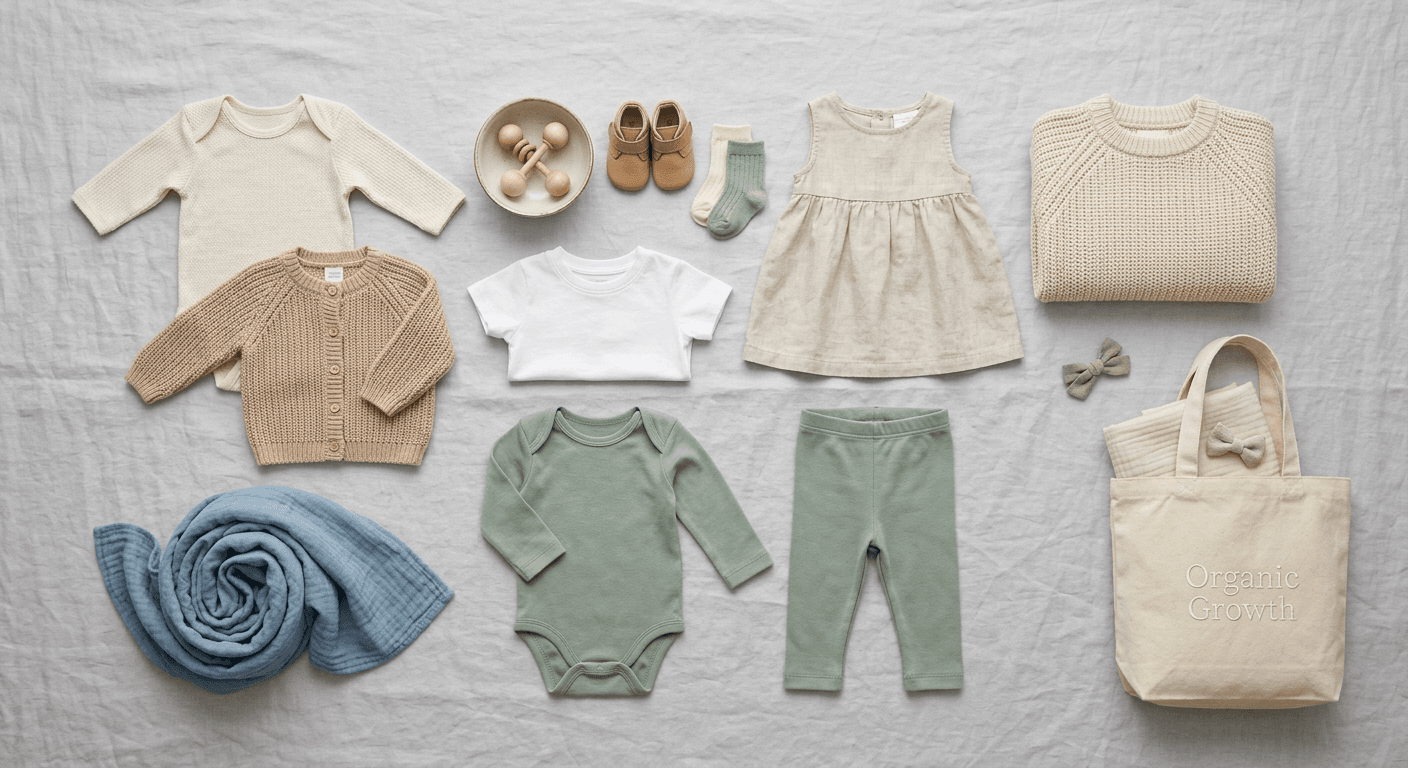
Ten real benefits of a natural fiber capsule wardrobe. It saves you time and money, cuts the clutter and the stress, and makes getting dressed easy every day.